
Sauerkraut
Johanna Budwig recognised the value of fermented foods as early as the 1950s. Modern research has since discovered many ways that traditional fermented foods can play an important role in supporting good health.
Make Your Own Sauerkraut Juice | Home Made Own Sauerkraut | Juicing Sauerkraut
The Budwig Diet recommends drinking a small glass of fresh sauerkraut juice before breakfast each morning. This is not the salty brine from the jar, but juice pressed from fresh, raw sauerkraut. It is naturally rich in vitamin C, enzymes and beneficial bacteria that help support a healthy gut microbiome. It is also considered to have an alkalising effect on the body.
Sauerkraut is simply cabbage preserved by natural fermentation. During the fermentation process, naturally occurring lactic acid bacteria transform the fresh cabbage into a tangy, nutritious food rich in beneficial bacteria and other valuable nutrients. It has a pleasantly sharp, slightly salty flavour and, when homemade, is far more enjoyable than many people expect.
Sauerkraut can be eaten as a vegetable or relish and makes a delicious accompaniment to many meals. Like other fermented vegetables, it was originally developed as a way of preserving food and remains popular throughout much of Europe and many other parts of the world.
Sauerkraut Juice
For the Budwig Diet, the juice has to be made from fresh, raw, unpasteurised sauerkraut. This usually means making your own sauerkraut, which is inexpensive and surprisingly simple, although it takes a little time and patience. If that is not practical, you can buy raw sauerkraut in supermarkets and online.
 Make Your Own Sauerkraut Juice:
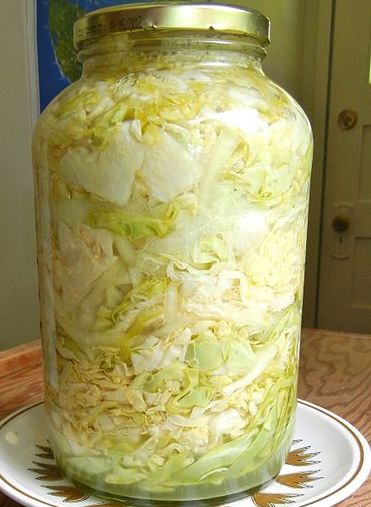
If you think you don’t like sauerkraut, don’t be put off. Many people who make their own discover they enjoy both the flavour and the health benefits. Homemade sauerkraut is fresher, milder and far superior to most commercially produced versions.
Raw sauerkraut and its juice provide beneficial bacteria, vitamins, minerals and enzymes that support healthy digestion and help maintain a balanced gut microbiome. Because the Budwig Diet recommends juice made from fresh sauerkraut, the first step is to make your own fermented cabbage.
Making sauerkraut at home is enjoyable and allows you to adjust the flavour to suit your own taste. You can also add vegetables such as carrots or beetroot for variety. See our make your own sauerkraut recipe.
Juicing Sauerkraut
Always juice fresh, raw, unpasteurised sauerkraut to obtain the maximum benefit from its live bacteria and natural enzymes. Avoid using canned or pasteurised jarred sauerkraut, as the heat treatment destroys the beneficial bacteria.
Once your sauerkraut is ready, store it in the refrigerator and use it within a few days, freeze it in airtight containers, or keep it in the fermentation crock. If storing it in the crock, make sure the cabbage remains completely submerged beneath the brine to exclude air and maintain the quality of the fermentation.
A masticating juicer, or one designed for juicing wheatgrass and leafy vegetables, usually gives the best results.