Category Archives: Budwig News

Ideas for what to eat on the Budwig Diet

Some ideas for Foods You Can Eat on the Budwig Diet

One of the biggest surprises for people starting the Budwig Diet is just how much they can eat.

If you’re coming from a more traditional Western diet, the Budwig Diet may seem rather restrictive at first. In reality, only a relatively small number of foods are excluded.  The diet encourages you to eat a much wider variety of foods than you were eating before.

This isn’t a complete list of every permitted food, but it gives you a good idea of the types of foods that form the basis of the Budwig Diet. Eat a wide variety rather than relying on just a few foods. The foods you include are just as important as those you avoid.

Grains and Cereals

  • Amaranth
  • Barley (whole grain)
  • Brown rice
  • Buckwheat
  • Millet
  • Oats
  • Quinoa
  • Rye
  • Spelt
  • Whole wheat
  • Wholemeal bread (a little)

Vegetables

Choose a wide variety of naturally grown vegetables.

  • Leafy vegetables
  • Root vegetables
  • Stems and shoots
  • Brassicas
  • Potatoes
  • Fresh herbs
  • Vegetable stock

Raw salads are excellent, but vegetables can also be lightly cooked. Dr Budwig mentions boiling, although steaming is equally suitable.

Fruit

Fresh fruit of all kinds.

Pulses

  • Beans
  • Peas
  • Lentils
  • Chickpeas
  • Fresh and dried pulses
  • Beansprouts

Nuts and Seeds

  • Whole flaxseed (linseed)
  • Sprouted seeds
  • Nuts
  • Pumpkin seed oil
  • Pumpkin seeds
  • Sunflower seeds

Fermented Foods

  • Sauerkraut
  • Sauerkraut juice
  • Fermented pickles
  • Lacto-fermented vegetables
  • Traditionally fermented soy products
  • Traditionally fermented soy sauce

Dairy Foods

Dr Johanna Budwig specifically recommended several cheeses. It is important that these are traditionally-made rather than the plastic-wrapped, rubbery supermarket versions.  Only to be eaten in small amounts.

  • Brie
  • Camembert
  • Cheddar
  • Emmental
  • Goat’s cheese
  • Gouda
  • Jarlsberg

These cheeses are good sources of vitamin K₂. Choose cheese from naturally grass-fed animals whenever possible. Around 50 g per day is generally recommended, preferably at breakfast or lunch.

Quark

Cottage cheese

Strained Greek yoghurt

These are essential foods because they are used to prepare Budwig Cream.

Oils

  • Cold-pressed flaxseed (linseed) oil
  • Extra virgin organic coconut oil (for making Oleolux)

Drinks

  • Green tea (freely)
  • Black tea (occasionally, without milk or sugar; a little honey is acceptable)
  • Wine or Champagne (up to one glass a day)
  • Herbal tea
  • Freshly squeezed juices. These should have some ground flaxseed added to mitigate the fruit sugars

Other Foods

  • Raw honey
  • Nutritional yeast (yeast flakes)
  • Herbs
  • Spices

Nutritional yeast has a pleasant, cheese-like flavour and should not be confused with brewer’s yeast tablets or yeast supplements.

A Note on Whole Grains

The Budwig Diet traditionally includes whole grains such as wheat, oats, rye, barley, spelt and rice.

However, there is increasing discussion about the possible health effects of modern grains. If this interests you, Loren Cordain’s Wheat: Humanity’s Double-Edged Sword is worth reading as background. Eating wholegrains in a high fibre diet are usually tolerated better. Some people will find they do better on some grains than others.

Grains are more a “fill you up if still hungry” food than a staple on this diet.

Remember that this is only an introduction to the foods permitted on the Budwig Diet. Once you begin preparing Budwig meals, you’ll quickly discover there is far more variety than most people expect.


Budwig Diet for Hebe, a Springer Spaniel

My Experience with Hebe

Hebe, my dear old Springer Spaniel, had been fed mainly raw food together with a little Flax Farm cold-pressed flaxseed oil for about six years. I originally gave him the oil to help with stiffness in his spine and joints, and it certainly improved him.He was still charging around on long ten-mile walks at sixteen and would come out working at seventeen. At 18 he began to slow down  a bit and developed several growths, at least one of which I did not like the look of.

The vet agreed that, at his advanced age, if the growths were not bothering him, there was little point in operating and didn’tthink drugs would be fair at his age because one can never know whether an animal is suffering unpleasant side effects.  The vet agreed.

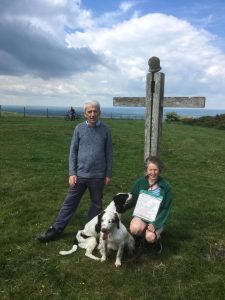
Hebe Hebe and Colin

Why I Chose the Budwig Diet

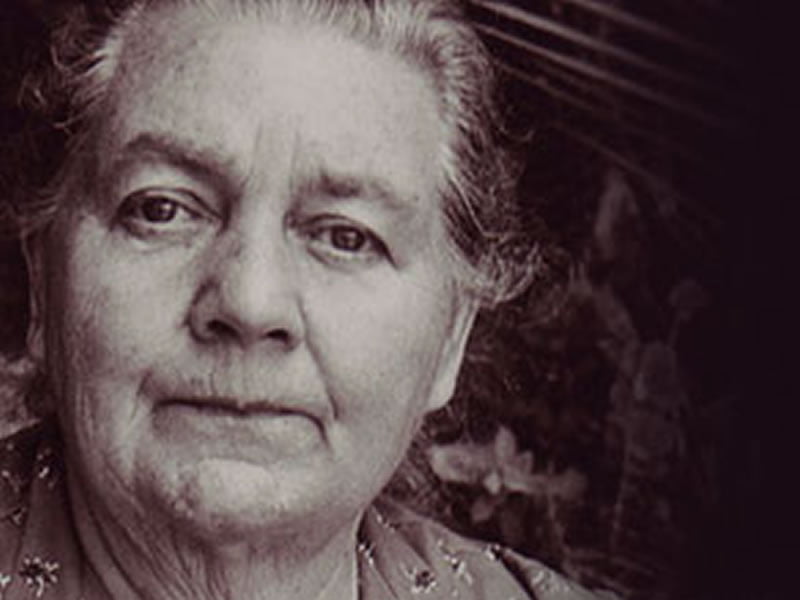
The Budwig Diet was developed by Dr Johanna Budwig in the 1950s. It remains popular as a holistic nutritional approach because it aims to support the whole body rather than simply address individual symptoms.

I had seen encouraging results in people who followed the Budwig Diet and had used it myself. I knew it was both practical and enjoyable, which gave me confidence in its principles.

Although Dr Budwig did not develop a version specifically for dogs, several of my customers had adapted it successfully for their own dogs. That, together with my own experience, convinced me it was the right approach for Hebe.

The human Budwig Diet is vegetarian and includes vegetable juices, salads and green tea. I did not feel that the full human version was appropriate for an elderly dog. Instead, I adapted it while keeping as closely as possible to Dr Budwig’s core principles.

Cold-pressed flaxseed oil for dogs
Flax Farm Cold-pressed flaxseed oil for dogs.

Principles of the Budwig Diet for Dogs

  • Plenty of omega-3 from flaxseed oil, thoroughly blended with dairy rich in sulphur-containing amino acids.
  • One or two portions of the Budwig mixture each day.
  • Stable blood sugar by avoiding refined carbs and using high-fibre ground flaxseed.
  • Plenty of antioxidants.
  • Adequate vitamins and minerals.
  • Support for gut health and a healthy microbiome.
  • Exclusion of all processed foods
  • Reduced stress.
  • Appropriate daily exercise.
Two spaniels with glossy coats, aged nine and nineteen
Glossy coats on two spaniels aged nine and nineteen, both fed Flax Farm cold-pressed flaxseed oil.

Hebe’s Version of the Budwig Diet

To try to slow the development of the tumours, I decided to put Hebe on a dog-friendly version of the Budwig diet. He was eighteen when he started.

Within days, it was like changing his batteries. Other people noticed the difference too. At nineteen years and three months, only nine months short of twenty, he was still looking good, went most places at a smart trot, loved retrieving and could still do that at a canter.

His coat looked good. He had always been extremely active and demanding, following me from room to room and getting under my feet, and I was pleased to say that he remained mischievous, energetic and very much himself.

When I took him to the vet for a check-up at nineteen, she was amazed that a dog with such a massive heart murmur still had good colour in his gums and a strong, slow, steady heartbeat. His blood tests showed normal kidney function, liver function and blood sugar levels.

The Budwig diet for dogs combines cold-pressed flaxseed oil with quark
The Budwig diet for dogs combines cold-pressed flaxseed oil with quark.


Postscript

Hebe went on to reach twenty. He remained bright, active and very much the mischievous Hebe until the end.

Then a gastric bug spread through the local dogs. The younger dogs recovered after a few days, but it took too much out of Hebe. When life was no longer enjoyable for him, I made the heartbreaking decision to let him go.

I had owned him for eighteen and a half years. He had been a true friend and was completely irreplaceable.

Hebe aged nineteen, still active and mischievous
Hebe aged nineteen, still sprightly and mischievous, trying to raid the bird food.


Hebe aged eighteen and a half out for a run


Further Reading

Vitamin D

Vitamin D3: Sunshine First, Supplements When Needed

Johanna Budwig regarded vitamin D, the sunshine vitamin, as an important part of supporting the body during inflammatory conditions and serious illness, including cancer. That’s why regular sunbathing formed part of the original Budwig Protocol.

More Important Than Ever

When Budwig developed her protocol, people naturally spent far more time outdoors. Today, many of us work indoors, travel by car, exercise inside and deliberately avoid the sun. As a result, vitamin D deficiency has become increasingly common.

This is especially true in northern countries such as the UK, where sunlight is limited for much of the year, and for people with darker skin, who naturally require more sunlight to produce the same amount of vitamin D.

Sunshine: Nature’s Source of Vitamin D

When the sun’s rays hit our skin, they convert a cholesterol compound into cholecalciferol (vitamin D3) So, when Johanna Budwig recommended sunbathing, she didn’t mean lying in the sun for hours. She meant spending a short time outdoors each day with bare skin exposed before applying sunscreen or covering up. In winter, this may be just your face and hands. In spring and summer, a few minutes is often enough for your body to begin producing vitamin D. The aim is simple: enough sunshine to make vitamin D—never enough to burn.

Vitamin D: More Than a Vitamin

Despite its name, vitamin D behaves more like a hormone than a vitamin. Almost every cell in the body has vitamin D receptors, allowing it to influence many essential functions.

Vitamin D helps the body:

  • Absorb calcium and phosphorus from food.
  • Build and maintain strong bones and teeth.
  • Regulate calcium balance through the kidneys.
  • Support a balanced immune response.
  • Influence normal cell growth and repair.
  • Support healthy nerve signalling and muscle function, including the heart.

Know Your Vitamin D Level

Many people assume they have enough vitamin D, but deficiency is common. A simple blood test can measure your vitamin D status and help you and your healthcare practitioner decide whether you need more sunshine, dietary changes or supplementation.

When Sunshine Isn’t Enough

The Budwig approach is always sunshine first. However, from around October to March in the UK, the sun’s UVB rays are too weak for the skin to produce meaningful amounts of vitamin D. If you spend little time outdoors, have darker skin, keep your skin covered, or it’s winter, a vitamin D3 supplement can help maintain healthy vitamin D levels until regular sunshine returns.

Vitamin D3 was one of the very few supplements Johanna Budwig recommended—not as a replacement for sunshine, but as a practical way to support vitamin D levels when nature cannot provide enough.

Iodine and Seaweed

Kelp & Seaweed

Because iodine is in such short supply in the average UK diet, adding a little seaweed is one of the simplest and most natural ways to increase your intake. As a bonus, seaweed is also rich in many other essential minerals and trace elements.

Seaweed has been a staple food in many coastal cultures for centuries. Strangely, despite living on an island surrounded by the sea, we eat very little of it in the UK.

Minerals naturally

Seaweeds naturally absorb minerals from seawater as they grow, concentrating a remarkable range of nutrients. When eaten as part of a balanced diet, they provide iodine and other minerals in a whole-food form, together with the natural compounds that accompany them. Just a small sprinkle over vegetables, soups or salads can add valuable minerals to your meals.

Unlike iodised table salt, seaweed provides iodine without encouraging a higher salt intake, whilst also supplying many other minerals at the same time.

Add a Little Seaweed to Your Diet

A small amount goes a long way. Sprinkle dried kelp, dulse or other seaweeds over your food, or add them to soups, stews and stocks. If you don’t enjoy the taste or can’t easily find seaweed, good-quality kelp or seaweed tablets and capsules are a convenient alternative. Choose products that are carefully tested for purity and contaminants, or certified organic where possible.

Minerals Found in Seaweed

Seaweed provides a wide range of essential minerals, including:

  • Calcium
  • Magnesium
  • Potassium
  • Sodium
  • Phosphorus
  • Sulphur
  • Chloride

Trace Minerals

Seaweed is also one of nature’s richest sources of important trace minerals, including:

  • Iodine – the best natural food source of iodine, essential for healthy thyroid function and hormone production.
  • Iron – supports the formation of healthy red blood cells and oxygen transport.
  • Zinc – contributes to normal immune function, wound healing and enzyme activity.
  • Manganese – supports normal metabolism and antioxidant enzymes.
  • Copper – helps with energy production, connective tissue and iron metabolism.
  • Selenium – works with iodine to support healthy thyroid function and helps protect cells from oxidative stress.

Seaweed also contains small amounts of many other naturally occurring trace elements found in seawater, contributing to its reputation as one of the most mineral-rich foods available.

Budwig Diet Online Group

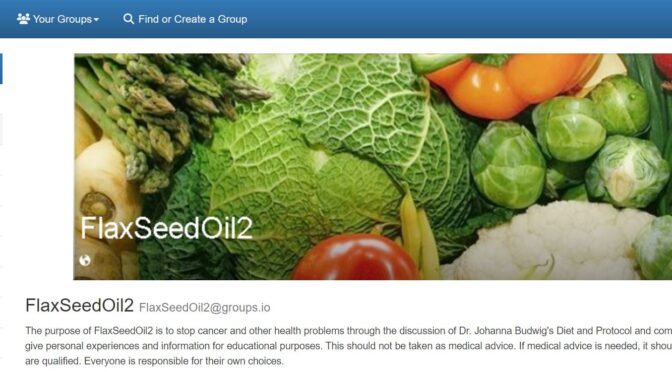
Budwig Diet Group/Forum: FlaxSeedOil2

https://groups.io/g/FlaxSeedOil2

This group was created by Sandra Olson to help people following or thinking of following the Budwig Diet, It is one of the best places to find support and advice to follow the protocol,

“The purpose of FlaxSeedOil2 is to stop cancer and other health problems through the discussion of Dr. Johanna Budwig’s Diet and Protocol and compatible treatments. Continue reading Budwig Diet Online Group

Great new Organic Alternative to Quark for the Budwig Diet

Yeo Valley Organic Kerned Yoghurt

If you’ve been buying quirk in the cheese section at the supermarket you may have missed this. It’s a great new product and very useful for anyone following the Budwig Diet.  It is ideal as an alternative to traditional quark for most people.  Made in the UK by Yeo Valley, it is organic, unpasteurised, contains live cultures, Lactobacillus bulgaricus, Streptococcus thermophilus and 10% protein which is just about ideal for combining with linseed (flaxseed) oil on the Budwig diet.  It tastes nice and creamy too.

Kerned yogurt alternative to quark cottage cheese for Budwig Diet
Kerned yogurt

Continue reading Great new Organic Alternative to Quark for the Budwig Diet

Dr Patrick Kingsley asking Why and Building Health.

I watched this video this morning and wanted to share it. The lovely man, a medical doctor who has learnt to see health and disease in a different way recommends natural, remedies to support other treatment and build the body back to health.

He is a scientist but gentle and reassuring.

The YouTube video is a revaluation.https://www.youtube.com/watch?v=_vwDcIgCfa0

Dr Patrick Kingsley's holistic approach to treating cancer intelligently
Dr Patrick Kingsley’s holistic approach to treating disease intelligently

New Study, Saturated Fats Heart Disease and Diabetes Risk

Saturated Fats link to diabetes and heart disease

This article highlights some of the reasons, including diabetes and heart disease risk why Dr Johanna Budwig  steered people away from meat and saturated fats and recommended the use of like to use  Cold-Pressed Linseed (Flax Seed) Oil instead of saturated fats whenever we can. http://care.diabetesjournals.org/…/ear…/2018/05/24/dc18-0071

Continue reading New Study, Saturated Fats Heart Disease and Diabetes Risk

Live Culture Kefir Quark

Live Kefir

I found this new live culture kefir quark in Waitrose yesterday.  Johanna Budwig promoted live fermented foods for the Budwig Diet.  Kefir is milk fermented with a special broad spectrum culture.  The bugs in this culture  are good bacteria which promote a healthier gut biome so are believed to benefit the digestion, immune system and the health of the whole body.

Live kefir quark cottage cheese

High protein, low fat

This has a lovely fresh flavour, a super texture, very low fat (virtually fat-free) and 12% protein which makes it ideal for the Budwig Diet. The downside is it is only in little tubs with a plastic spoon and is quite pricey but if you want a live cultured quark and don’t want to make it yourself this is a good option.  Hopefully in the future it will become available in larger tubs.

Live kefir quark cottage cheese

FOCC muesli

The Budwig diet is often called the Flax Oil Cottage Cheese FOCC diet because the cornerstone of the diet is thoroughly blended flax seed (linseed) oil and cottage cheese which is turned into a muesli with fruit, ground flax, nuts and honey added.

Budwig muesli a rich source of soluble prebiotic fibre
This delicious bowl of Budwig muesli was made with with live kefir quark, it’s  also  a rich source of soluble prebiotic fibre which makes it a very very digestion-friendly breakfast,

In her recipe for this muesli Johanna Budwig gave the recipe for  quark to be used. It is a simple European cottage cheese, made in the home; it is  much smoother and nicer for the Budwig muesli than British cottage cheese.  In many parts of Europe traditional home made quark used to have live cultures which makes it a healthier option.   This Kefir quark made a lovely Budwig Muesli blended with Flax Farm cold-pressed linseed (flaxseed) oil.  I made the Budwig muesli just the same way as normal.

Budwig Muesli Recipe

I blended  the tub of  kefir quark thoroughly  with 45 ml cold-pressed linseed (flax seed) oil, added a few drops vanilla extract, sweetened with stevia extract and added 2 heaped dessert spoons freshly ground linseed, a small tangerine , half a banana , a teaspoon of raw honey  and topped with strawberries and walnuts; yum! See more Budwig recipes 


Flax farm organic cold-pressed flax linseed oil

Flax farm organic cold-pressed flax (linseed) oil